





Tennessee Williams Studies
HNOC is one of four main repositories of the playwright’s work. We produce an annual scholarly journal and conference devoted to Williams, among other research tools, articles, and exhibitions.
Tennessee Williams Scholars Conference
Fans, researchers, and theater professionals get dramatic at this daylong conference presented by HNOC in conjunction with the Tennessee Williams and New Orleans Literary Festival.

Tennessee Williams Annual Review
Founded in 1998, TWAR remains the only journal devoted to the works, worldwide influence, and cultural context of one of the most pivotal playwrights of the 20th century.


Drawn to Life: Al Hirschfeld and the Theater of Tennessee Williams
by Mark Cave and David Leopold


Research Tools

Tennessee Williams Research Pathfinder
A complete guide to all of HNOC’s holdings related to the playwright and his work, including catalog links, finding aids, and more.

Tennessee Williams External Resources
HNOC is one of four main repositories of materials related to the playwright’s life and work.


First Draft
Stories from the Blog
The Life and Death of Tennessee Williams’s Beloved
Frank Merlo was the poet’s companion for 15 years. In a previously unpublished poem featured in the 2024 Tennessee Williams Annual Review, Williams grieves his death.


Glasnost Menagerie
Even while denigrating his work, Soviet reviewers set the stage for Tennessee Williams’s popularity in Russia.
The Life and Death of Tennessee Williams’s Beloved
Frank Merlo was the poet’s companion for 15 years. In a previously unpublished poem featured in the 2024 Tennessee Williams Annual Review, Williams grieves his death.

Shades of Blanche
An experimental theater production sheds new light on one of Tennessee Williams’s most beloved characters.

Tennessee Williams’s First French Quarter Home
In an attic apartment, the young playwright came into his own as an artist. A new video explores the historic building, which HNOC has owned since 1945.

Master Sergeant Stanley Kowalski, Tennessee Williams’s Portrait in PTSD
An iconic character’s World War II service and its meaning to postwar audiences

The Global Impact of “A Streetcar Named Desire”
Tennessee Williams’s most enduring work is produced all over the world, taking on new life as modern dramaturgists apply contemporary themes to the timeless text.

Ten Historic Objects That Tell the Story behind “A Streetcar Named Desire”
From Tennessee Williams’s typewriter to Vivien Leigh’s behind-the-scenes photos, items from HNOC’s holdings document the birth of a literary and film classic.

Pulling Back the Curtain on “A Streetcar Named Desire”
HNOC interviewed two Tennessee Williams scholars about the Tennessee Williams Annual Review and the cultural impact of Streetcar.

Local Actors Reveal the Power of “A Streetcar Named Desire”
Dialect coach Francine Segal and local actors discuss accents and acting styles seen in the classic film.
Where He Lived
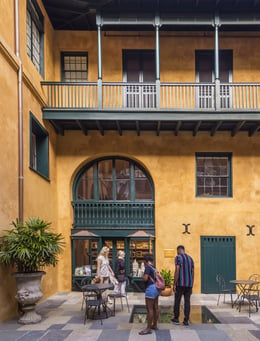
Read more about the HNOC-owned building that Tennessee Williams once called home.

Tennessee Williams’s First French Quarter Home
In an attic apartment, the young playwright came into his own as an artist. A new video explores the historic building, which HNOC has owned since 1945.
Subscribe to Our Newsletter
